Applying Narrative Theories
Todorov
This theory states that a narrative follows a simple structure involving five stages;
1) A state of equilibrium
3) A recognition that disorder has occurred
4) An attempt to repair the damage
5) A return or restoration
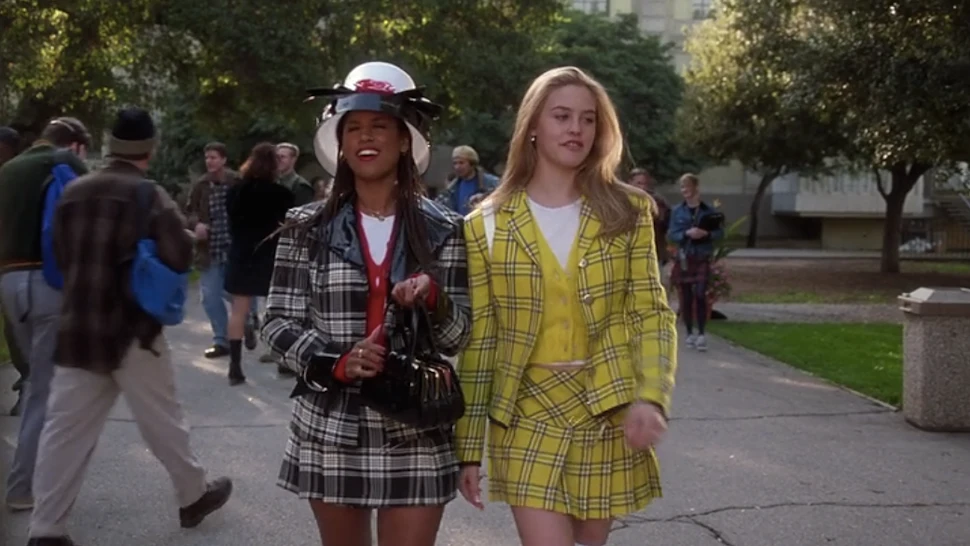
The film Clueless follows this structure throughout the narrative.
1)The film begins where Cher is a popular High-schooler who appears to care about very little other than herself. Her only problem is her report card which isn't as good as she wanted. However whilst trying to bargain her grades she helps two of her teachers find love and begins to realise helping others feels good. At the start of the film Cher is in a state of equilibrium as our all her friends everything within the school appears fairly average and normal.
2) However after Cher's new found love of helping others she cant stop herself from helping new girl Ty who she describes as "clueless". Cher and her best friend Dionne decide to give Ty a makeover and turn her into completely different person. Despite the character Ty being kind nature by helping Ty this causes a knock on effect leading to Cher slowly losing her friends, popularity and even her love interest Josh. Although the disruption happens in this portion of the film Cher doesn't realise that her school and social life is slowly deteriorating.
3) After Cher and Ty have an argument Cher goes shopping and thinks over everything that has gone wrong lately and realises that she's just got her priorities wrong and needs to focus on people rather than popularity.
4) When Cher comes to this realisation she talks to Ty and the two characters both forgive each other and move on which in turn causes Ty to become more like her old self. Cher also finally admits her feeling to her love interest Josh who reciprocates the feelings. Cher's character development is also shown in this stage of the film as she does a completely selfless act by helping a charity. By repairing her relationship with Ty Cher undoes all that went wrong in her life and now has a different outlook on life.
5)With everything resolved the film ends with the two teachers Cher helped in the first stage getting married which shows the positive effects of Cher's original selfish act. All the characters appear even happier than they were in the beginning showing character growth for all the main characters and a return to an even better normal.
2) However after Cher's new found love of helping others she cant stop herself from helping new girl Ty who she describes as "clueless". Cher and her best friend Dionne decide to give Ty a makeover and turn her into completely different person. Despite the character Ty being kind nature by helping Ty this causes a knock on effect leading to Cher slowly losing her friends, popularity and even her love interest Josh. Although the disruption happens in this portion of the film Cher doesn't realise that her school and social life is slowly deteriorating.
3) After Cher and Ty have an argument Cher goes shopping and thinks over everything that has gone wrong lately and realises that she's just got her priorities wrong and needs to focus on people rather than popularity.
4) When Cher comes to this realisation she talks to Ty and the two characters both forgive each other and move on which in turn causes Ty to become more like her old self. Cher also finally admits her feeling to her love interest Josh who reciprocates the feelings. Cher's character development is also shown in this stage of the film as she does a completely selfless act by helping a charity. By repairing her relationship with Ty Cher undoes all that went wrong in her life and now has a different outlook on life.
5)With everything resolved the film ends with the two teachers Cher helped in the first stage getting married which shows the positive effects of Cher's original selfish act. All the characters appear even happier than they were in the beginning showing character growth for all the main characters and a return to an even better normal.
Propp
This theory is based upon folk tales stating every narrative has a set of characters.
Hero- Batman 
Although to the other characters Batman is seen as a bad guy by repetitively saving lives and stopping the villains he proves to be a typical hero.
Villain- Joker
Despite the amount of corrupt and bad people within the fictional city of Gotham the villain of the narrative is the Joker. The character has no regard for others and does everything for self gain. Also he kills the heroes love interest which is a very common attribute for the typical villain.
Father figure- Alfred
The protagonist has no parents and there for relies on his butler like many Father figures Alfred often gives Batman advice and it's always in his best interest to keep him safe.
False hero- Harvey Dent
Through out the film Harvey is seen as a better version of Batman his decision are safer and smarter and he seems to be making Gotham slower safer. However after the Joker kills Rachel Harvey wants revenge and takes on the name Two Face except the Joker gets to Harvey first and convinces him Rachel's death was because of the Police officers the Joker black mailed into helping him. Which leads the character to kidnap Commissioner Gordan's son then leaves Batman no choice but to let Harvey die. Ultimately leading a hero to become a bad guy.
Princess- Rachel
Despite Rachel needing saving and becoming the damsel in distress she is also very capable on her own however the stereotype is broken slightly in this narrative by the hero not being able to save her.
Dispatcher- Police Force
Within the narrative the Gotham police force are often the first to try to stop the Joker and always fail I believe this is important to the narrative because it highlights Batman strength and victory. The dispatcher is normally used to show the severity of the situation and highlight the heroes ability.
Helper- Commissioner Gordan
Batman and the Commissioner have a strong relationship they rely on each other for help as the Commissioner realises the police need Batman to make Gotham safe. Throughout the narrative the Commissioner helps move the story along by feeding advice to hero.
Victim- Rachel, Harvey and citizens of Gotham
Although Rachel and Harvey already fit into other character stereotypes they both as a result of the conflict. However extras playing Gotham residents also die or are injured.
Through out the film Harvey is seen as a better version of Batman his decision are safer and smarter and he seems to be making Gotham slower safer. However after the Joker kills Rachel Harvey wants revenge and takes on the name Two Face except the Joker gets to Harvey first and convinces him Rachel's death was because of the Police officers the Joker black mailed into helping him. Which leads the character to kidnap Commissioner Gordan's son then leaves Batman no choice but to let Harvey die. Ultimately leading a hero to become a bad guy.
Princess- Rachel
Despite Rachel needing saving and becoming the damsel in distress she is also very capable on her own however the stereotype is broken slightly in this narrative by the hero not being able to save her.
Dispatcher- Police Force
Within the narrative the Gotham police force are often the first to try to stop the Joker and always fail I believe this is important to the narrative because it highlights Batman strength and victory. The dispatcher is normally used to show the severity of the situation and highlight the heroes ability.
Helper- Commissioner Gordan
Batman and the Commissioner have a strong relationship they rely on each other for help as the Commissioner realises the police need Batman to make Gotham safe. Throughout the narrative the Commissioner helps move the story along by feeding advice to hero.
Victim- Rachel, Harvey and citizens of Gotham
Although Rachel and Harvey already fit into other character stereotypes they both as a result of the conflict. However extras playing Gotham residents also die or are injured.
Levi-Strauss
This theory is based around binary opposites stating that in order for a narrative to continue there must a conflict of opposition.
I've applied this theory to an episode of Black Mirror called 'Nose dive'.
Light vs Dark:
At the start of the episode when Lacey is happy the whole set is light all the props and backgrounds have bright colours conveying to the audience the joyful atmosphere of the characters. However as the narrative continues the subject matter turns more sinister as the audience see's how ugly the fictional paradise is and how it effects people. The new ominous nature is represented within the lighting which slowly turns darker as the narrative goes on. Until the final scene which is set in a prison which is shrouded in darker colours; the props are now grey whereas at the start of the narrative they were mostly pinks and blues, the protagonists costume is dirty and there is no natural light in the prison. The opposing colours are used very effectively within this narrative to show the audience the change of emotion and well being of Lacey.


Reality vs Fantasy:
The idea of reality is very big concept to this narrative as its set in a world where everyone is judged by a new type of social media. From the start it is obvious that many characters fake reactions or even happiness to be able to get a high score. A scene which particularly highlights this is when the protagonist Lacey is practising her fake laugh in the mirror a well acted and faintly disturbing look into how fictional this world is even to the characters within it. Throughout the narrative the audience follow the protagonist faking her way into getting a higher score however the pressure living in a fantasy world drives the character into having a mental breakdown. The final scene takes place in a prison where Lacey has no social media and begins an argument with a fellow prison mate as the scene ends with them screaming at each other the audience see's the two characters smile showing that although they are prisoners they finally feel free.
I've applied this theory to an episode of Black Mirror called 'Nose dive'.
Light vs Dark:
At the start of the episode when Lacey is happy the whole set is light all the props and backgrounds have bright colours conveying to the audience the joyful atmosphere of the characters. However as the narrative continues the subject matter turns more sinister as the audience see's how ugly the fictional paradise is and how it effects people. The new ominous nature is represented within the lighting which slowly turns darker as the narrative goes on. Until the final scene which is set in a prison which is shrouded in darker colours; the props are now grey whereas at the start of the narrative they were mostly pinks and blues, the protagonists costume is dirty and there is no natural light in the prison. The opposing colours are used very effectively within this narrative to show the audience the change of emotion and well being of Lacey.
Reality vs Fantasy:
The idea of reality is very big concept to this narrative as its set in a world where everyone is judged by a new type of social media. From the start it is obvious that many characters fake reactions or even happiness to be able to get a high score. A scene which particularly highlights this is when the protagonist Lacey is practising her fake laugh in the mirror a well acted and faintly disturbing look into how fictional this world is even to the characters within it. Throughout the narrative the audience follow the protagonist faking her way into getting a higher score however the pressure living in a fantasy world drives the character into having a mental breakdown. The final scene takes place in a prison where Lacey has no social media and begins an argument with a fellow prison mate as the scene ends with them screaming at each other the audience see's the two characters smile showing that although they are prisoners they finally feel free.
Comments
Post a Comment